Speed to lead: why the first hour decides your lead quality
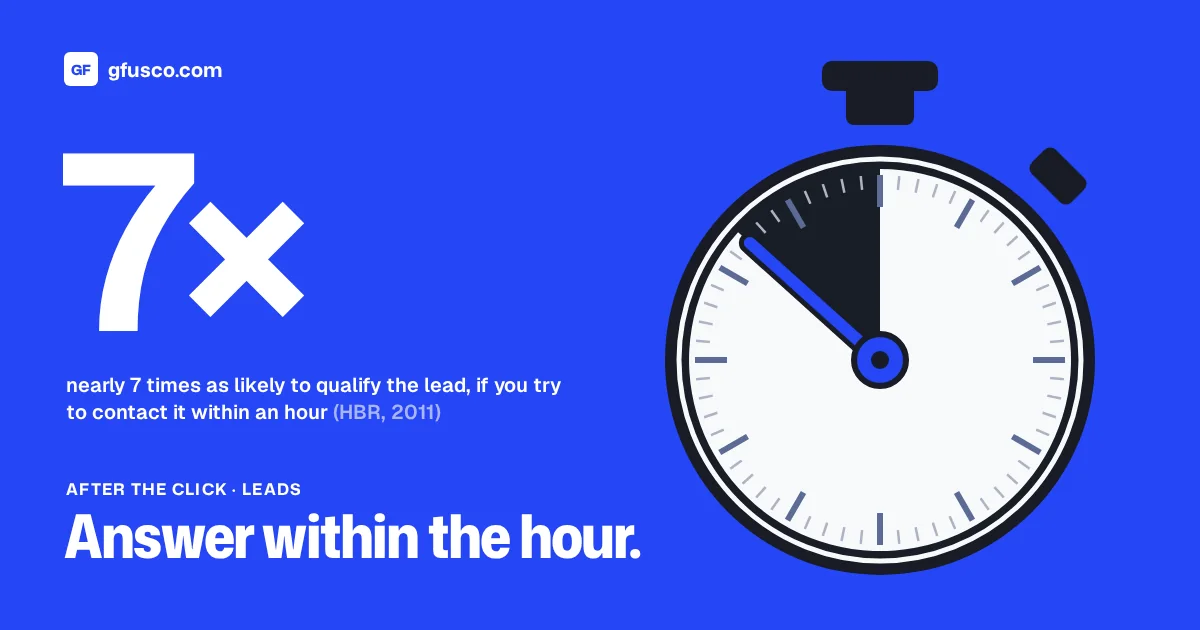
Speed to lead is the time between a lead sending your form and your first real contact with them. Shorter is much better. A Harvard Business Review study found that companies who tried to contact a lead within an hour were nearly seven times as likely to qualify it as those who tried just one hour later.
Most businesses I look at are slower than they think. The fix is rarely more ads. It is a faster reply.
What is speed to lead?
Speed to lead, or lead response time, measures how fast you respond to a new inbound lead. The clock starts when the form is sent. It stops when a person talks to the lead or replies with something useful.
An automatic "thanks, we got your request" email does not count. It helps, but it is not a reply.
What does the research say about lead response time?
The study most people quote is "The Short Life of Online Sales Leads" by Oldroyd, McElheran and Elkington. It came out in Harvard Business Review in March 2011 and has two parts.
First, the authors sent a test lead to 2,241 US companies and timed the answer.
| Response time | Share of companies |
|---|---|
| Within one hour | 37% |
| One to 24 hours | 16% |
| More than 24 hours | 24% |
| Never responded | 23% |
Among the companies that answered within 30 days, the average response time was 42 hours.
Second, they looked at 1.25 million leads received by 42 US companies, 29 B2C and 13 B2B. Firms that tried to contact a lead within an hour were nearly seven times as likely to qualify it as firms that tried one hour later. They were more than 60 times as likely as firms that waited 24 hours or more. In the study, qualifying means having a meaningful conversation with a key decision maker.
Two notes, so the numbers are not oversold. The study is from 2011. And it says nothing about five minutes, even if many blog posts claim it does. Its finding is about the first hour.
Why does the first hour matter so much?
When someone fills in a form, they are thinking about the problem right now. They may have filled in forms from two competitors in the same ten minutes. The first one to call has a real conversation. The others leave a voicemail.
A few hours later they are back at work or in a meeting. They do not remember your ad. If the lead came from a Meta instant form, they may not remember filling it in at all.
What slows down response time?
The HBR authors name some causes, like pulling leads from the CRM once a day, and rules that hand leads out by region or by turn. I see the same patterns in small and mid-size companies today:
- leads arrive in an inbox someone checks once a day
- Meta leads stay inside Meta until someone downloads them
- the form sends an email, but nobody owns that inbox
- leads go to whoever is next in line, and that person is busy
- the sales team prefers its own prospects to inbound leads
On paper none of these is a marketing problem. All of them waste ad budget.
How do you improve speed to lead?
This is the order I would work in, from cheapest to most effort.
- Measure it. Save the time of the form and the time of the first contact in the CRM. Without the number, every discussion is opinion.
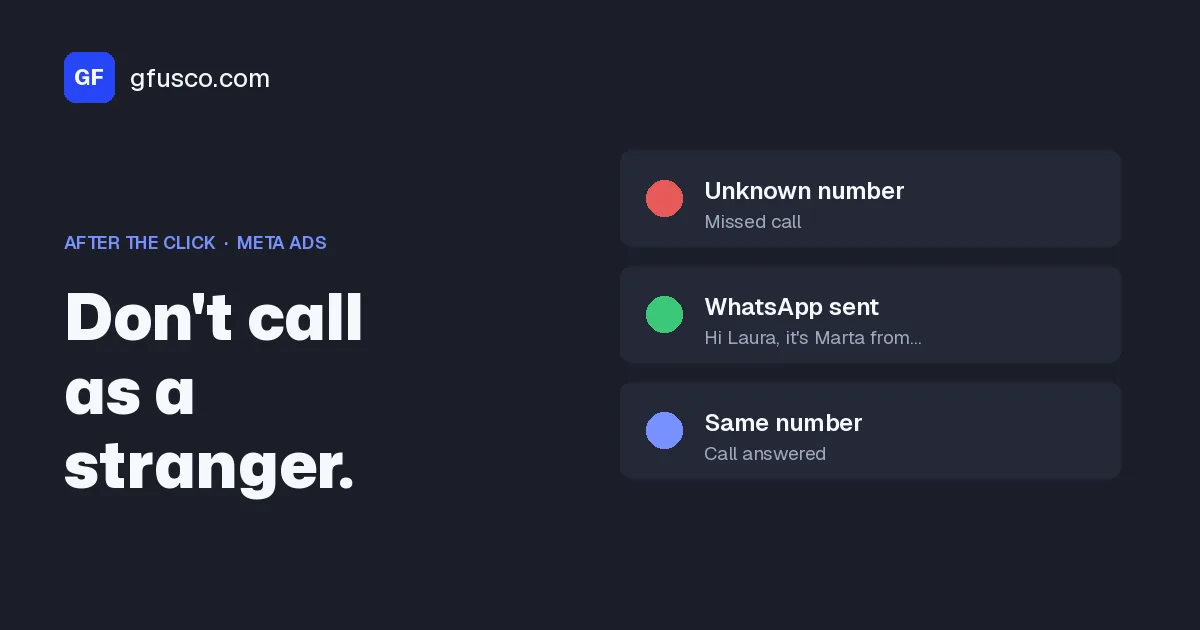
- Send leads where people already look. A push notification, a Slack message or a WhatsApp alert to the person on duty. Not a shared inbox.
- Give every lead one owner. A name, not "the sales team".
- Set a target you can keep. For example, every lead called within one hour during office hours, and first thing next morning for the rest.
- Send a useful automatic reply. Say who will call and when. Add a calendar link for people who prefer to book.
- Track outcomes, not calls. Did you reach the person? Was the lead qualified? Put it in the CRM.
The last step connects back to the ads. Once you record which leads were qualified, you can send that to Google Ads and Meta as offline conversions. Then the platforms learn from leads you actually spoke to.
Does speed to lead apply to B2B?
Yes. The HBR data on 1.25 million leads included 13 B2B companies. B2B deals take longer to close. The first contact still decides whether the deal starts at all.
In B2B the first contact may be an email, not a call. That is fine. What counts is a real reply from a person, sent fast, that moves the lead to a next step.
How does speed to lead change your cost per customer?
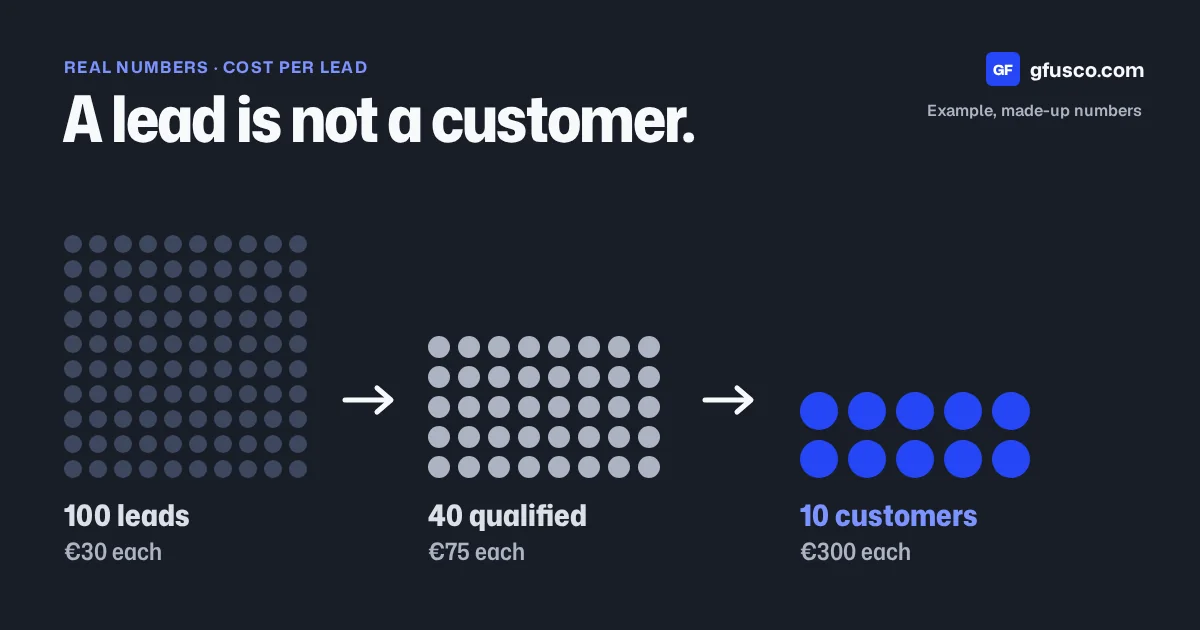
Picture two teams with the same ads and the same cost per lead. One calls in 20 minutes, the other the next day. If the first team qualifies more leads from the same spend, its cost per qualified lead is lower. The dashboard still shows the same cost per lead for both.
That is why I look at cost per qualified lead and cost per customer, not only cost per lead. You can see the effect in my cost per lead calculator. Change only the share of leads that become qualified and watch the cost per customer move. My post on cost per lead vs cost per customer explains the maths.
FAQ
What is a good lead response time?
The HBR study used one hour as its line. Faster is better, as long as you can keep it up every day.
Does an autoresponder count as a response?
No. It is useful to confirm the request, but speed to lead measures the first real contact from a person.
Is the five-minute rule from the HBR study?
No. The 2011 HBR article is about the first hour. Five-minute claims come from other sources.
What tools help with speed to lead?
Your CRM, a notification channel your team reads, and a clear owner for each lead. Tools help. A rule with a name on it matters more.